Despite a slight increase in the 2026 budget, public investment in basic and secondary education remains critically low. At MINEDUB and MINESEC, funding continues to prioritise operating costs, leaving school infrastructure largely neglected.
Investment Marginalised in Education Budgets
For 2026, MINEDUB has been allocated a total budget of CFA 332.051 billion, of which only CFA 30.7 billion—approximately 9%—is earmarked for the Public Investment Budget (PIB). The remaining CFA 301.351 billion is devoted to recurrent expenditure.
The situation is even more worrying at MINESEC, where public investment represents just 3.5% of the total budget, with CFA 21.91 billion allocated to the PIB. These figures clearly reveal that investment in educational infrastructure is not treated as a strategic priority, despite its central role in improving access, equity and quality in education.
Although these investment allocations show a slight increase compared to 2025, they fall far short of the level required to meet Cameroon’s growing educational needs.
A Deepening Infrastructure Crisis
The consequences of chronic underinvestment are visible across the country. Access to quality school infrastructure remains a major challenge, marked by sharp regional and social inequalities.
According to a UNESCO study published in June 2025, The Situation of Children in Cameroon, half of the country’s regions are severely affected by inadequate school infrastructure. The Far North, North, Adamawa and East regions remain among the most deprived. In the North-West and South-West regions, the prolonged security crisis has further weakened an already fragile education system. Despite the emergency reconstruction plan launched by public authorities, progress on the ground remains slow and insufficient.
Rural–Urban Inequalities Persist
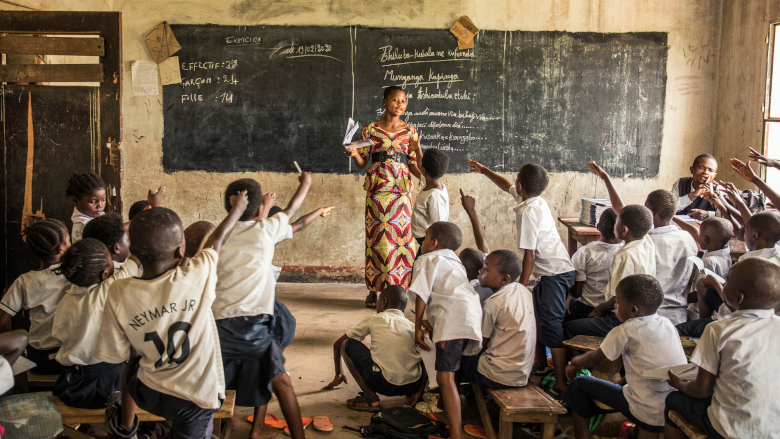
Beyond these regions, the infrastructure gap extends nationwide. Rural areas are particularly disadvantaged, with many children forced to walk several kilometres—often on unsafe routes—to reach school. In urban centres, overcrowding has become the norm, with classrooms far exceeding their intended capacity.
Current estimates indicate that over 30% of school-age children in remote areas lack access to adequate school facilities, directly undermining their right to education and their chances of academic success.
Low Investment, High Consequences
The limited construction of new schools continues to exacerbate overcrowding. Where buildings do exist, many are in a state of disrepair or lack essential services such as electricity and sanitation. Teaching under temporary shelters or in unsuitable spaces has become routine, with serious consequences for learning outcomes and teacher motivation.
The absence of electricity in many primary schools also restricts the use of digital and modern teaching tools, further widening the learning gap—especially in an era where innovation and technology are central to education systems worldwide.
Education Requires Political Commitment
At a time when Cameroon has committed to Sustainable Development Goal 4, guaranteeing inclusive and quality education for all, the current level of public investment sends a contradictory signal. Education cannot be transformed without sustained and strategic investment in infrastructure.
For the Cameroon Education For All Network (CEFAN), reversing this trend is an urgent necessity. Increasing public investment in education is not a luxury—it is a prerequisite for equity, resilience and national development. Without decisive action, the ambition of providing quality education for every child in Cameroon will remain out of reach.